At Kermit’s Table, Part 2
The famed importer and author recalls how he went from beatnik to successful wine businessman and reflects on the current state of wine
The famed importer and author recalls how he went from beatnik to successful wine businessman and reflects on the current state of wine
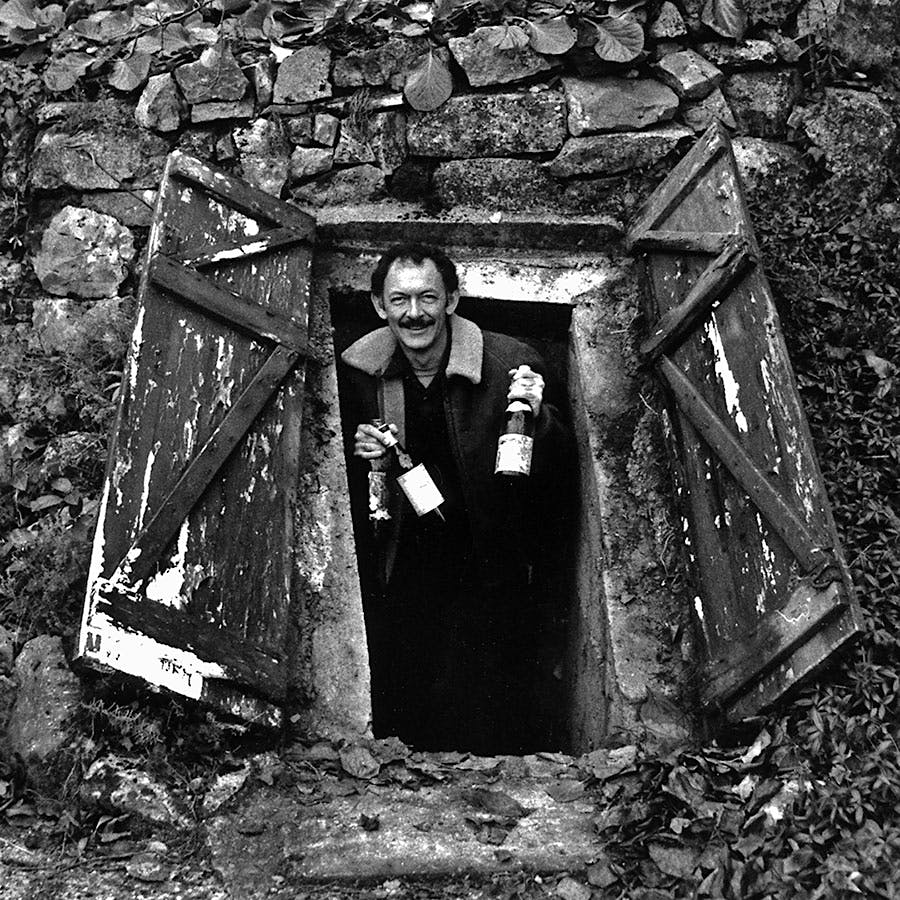
Like many of his generation who came of age in California in the 1960s, Kermit Lynch wanted to be a rock star. He was a creative “post-beatnik” and, needing to make some money, he stumbled into the wine business, opening his first wine shop near Berkeley at the age of 30.
With luck, good instincts and help from some talented friends, Lynch built a pioneering career in France as a wine importer and award-winning wine writer who championed small producers and wines that tasted of their local terroirs.
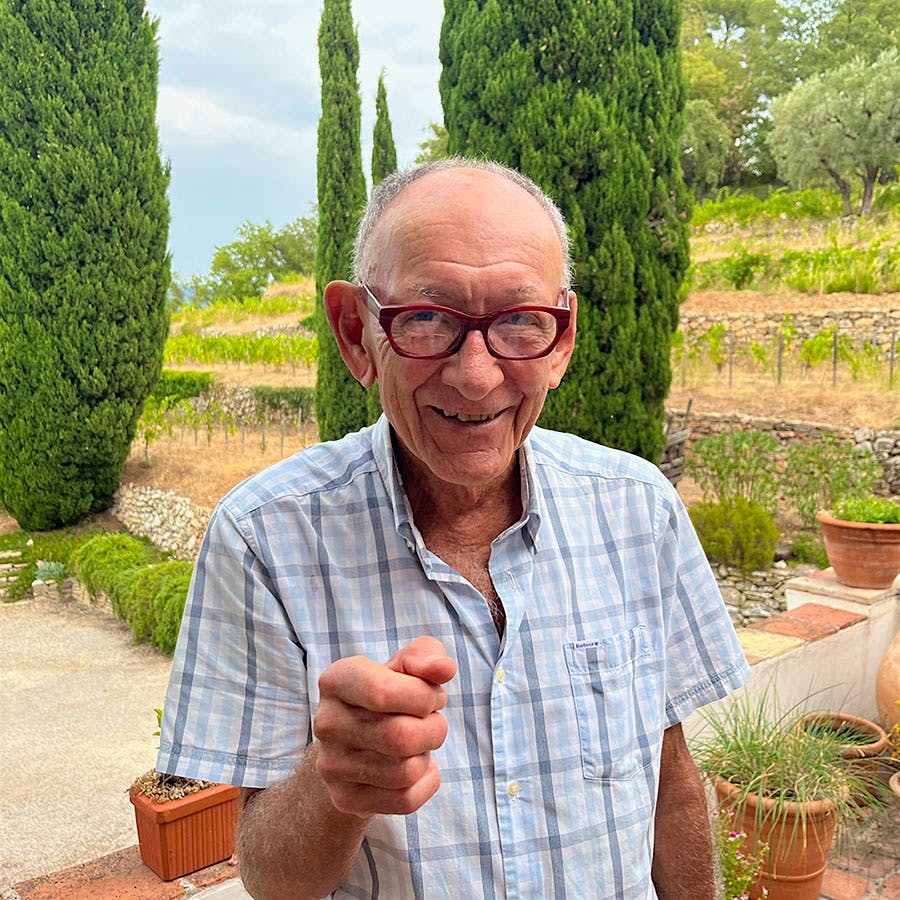
With the recent release of Lynch’s first novel, At Poupon’s Table, I interviewed him on the terrace of his home in coastal Provence, where he reflected on his extraordinary story and shared his thoughts on the changes and challenges facing the wine world today.
As noon arrived, Lynch broke out a chilled, dark-hued rosé—Corbières producer Maxime Magnon’s 2024 Metisse—and poured a pair of glasses.
Kermit Lynch: My father was a teetotaler. My mother was a party girl who wanted to drink and smoke and dance. So I had two influences. When I was nine, she left him and moved to San Luis Obispo with me.
She remarried, and some recent U.C. Berkeley graduates moved in next door. We all got to know them well. When I was in high school, they’d invite me over for lunch or dinner, and they always had wine with the meal.
I moved to Berkeley when I was still a student at San Francisco State. And I started buying wine from a Polish negoçiant there. It was called Oak Barrel Winery. He would go to Napa and buy little lots of wine and blend it and sell it in half-gallon jugs. So I continued my habit of drinking wine with lunch and dinner.
Then, at Berkeley, you had all the professors who were into wine. And I met a few people, and they invited me to join their wine tasting group. So suddenly I was tasting Bordeaux and California Cabernets.
I had a business called the Berkeley Bag, and I made ladies’ handbags from oriental rug scraps. I hated every minute of it, really! Then somebody came along and offered me money for my bag business. I couldn’t believe it.
With the money, my girlfriend and I came to Europe for four months in 1969, and in France, Italy and Spain, I ran into this food and wine culture, and I just loved it. It changed my life.
Meantime, I also decided: I’ve got to get a real job. One of the best things that ever happened to me [is] the Post Office refused me; otherwise I might still be delivering mail.
I had worked my way through high school and college selling shoes and men’s clothes, and I hated that. I thought I was going to be a writer or a singer. I had a rock and roll band, and I was writing for the local underground paper. But of course, where was the money? So I started looking for a job in a wine shop, but the wine world and almost everybody else in the early 1970s was going through a big economic crisis.
Berkeley alone had five retail liquor stores with incredible wine departments where I could go in and buy an old Yquem or Romanee-Conti. It was amazing. But they wouldn’t hire me because they were all firing. They couldn’t sell their wines. The market treated wine as a luxury, and it was the first thing to go in a crisis.
At one point, my girlfriend said, “Well, why don’t you open a little shop yourself?” So I thought, okay, I’ll look into that. And I did, and I found an importer who wanted a retail store to sell to, so he was willing to front me wine. And that’s how I got into it, right at the moment when the dumping started.
All those other stores owed a lot of money. They had tons of inventory, and the distributors and stores were selling wines for nothing. I was buying tons of those château and estate wines. Where I had been charging like $65 to $70 for echezeaux [a Burgundy grand cru], I could suddenly sell it for $6.99. It was ridiculous: I was selling ’67 Château Suduiraut [Sauternes] for $3. I bought Château-Grillet for $1 a bottle from a wholesaler in L.A.
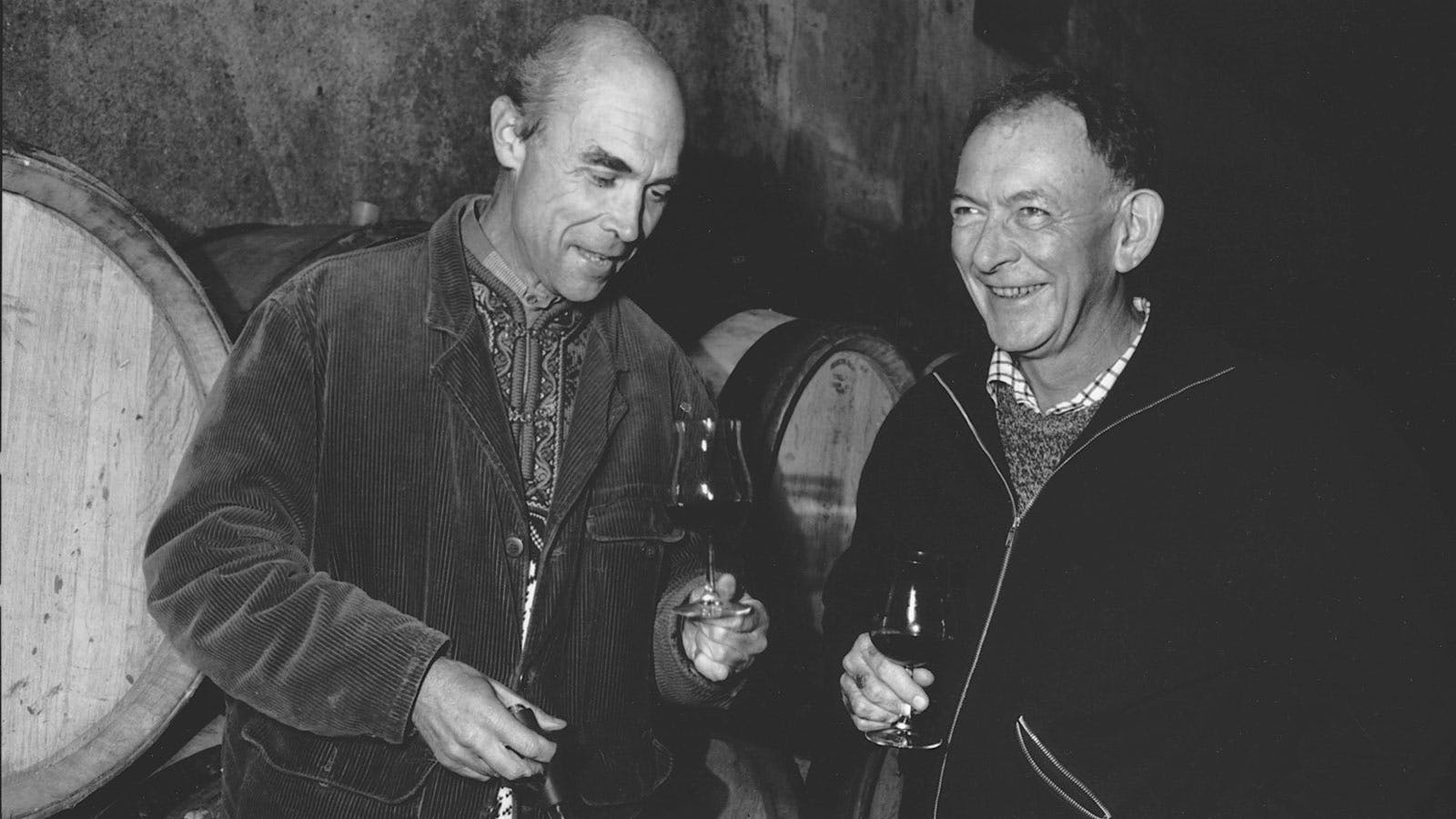
And one day I received this big catalog from [the American writer and importer] Frank Schoonmaker, who kept all his stock in Europe until he needed it. And this California winemaker [Sonoma legend] Joseph Swan—who was a customer and became my best friend—went with me to taste. We had a blast.
We flew to Germany and continued by car down into France. Things were so different then. For the flight, Alice Waters [of Berkeley’s Chez Panisse] fixed us up with a lovely picnic basket. Joe threw in a bottle of his ’68 Zinfandel, and I forget what I contributed. There were stewardesses in those days, and they wanted to picnic with us. A corkscrew was not considered a terrorist’s weapon back then.
And that’s how it started. I flourished during the crisis, and every one of the others went out of business.
I’m sort of worried about it, but it’s my team's job now to take care of it, not me. I’ve certainly warned them about everything I experienced. This is certainly not a time for us to stock up. You know, who knows what can happen with this geopolitical situation? Anything could happen. Anything.
We’ve been through more challenging things than that. Remember Prohibition? No, neither do I! The fine wine–drinking community will not wither before mere price changes. Sometimes prices go up, sometimes down. The important thing is to dine well.
Do I take this health stuff seriously? Show me where drinking wine with meals is unhealthy. Show me that! And who are you testing? A lot of it has to do with who is paying for the test and who is being tested.
When I started, the negociants, who bought wine and blended and bottled, were kings of French wine. And during my lifetime, I saw that changing and certain vignerons became superstars. They didn’t buy grapes and blend with other grapes from other places. It was their wine from their plot of land. In my mind, you could call them artists. They were trying to make something beautiful. That’s what I wanted to find—those guys who were maniacs to make the most beautiful wine they could. And I was thrilled to be a part of that.
Now the enologist is king. An enologist makes almost every wine for sale nowadays. For example, I’ve been told more than once that, in the Côtes de Provence, where they make massive quantities of rosé, there are something like 770 domaines, but only five enologists. And they use the same yeast, the same methods, the same everything—so there’s no individuality in those wines.
Today, the enologists, as I say in the novel, scare the winemakers into doing what they say, and then when the winemakers have to buy the medicine, where do they buy it? The enologist! We can’t do that with doctors—I mean a doctor can’t own a pharmacy—but we can do it with wine doctors.
They [both now deceased] were huge influences. Both of them I met in large part because of Alice Waters. I always listened to Alice. Richard and Lulu became some of my best friends, and one of the reasons I purchased this house here in 1986 was to be close to them.
Look, I feel like what I had to do, I’ve done it. And I’m not sitting around and thinking about these questions. I’ve got pros who know what’s going on better than I do. So, I’m enjoying wine, enjoying writing and enjoying friends … .
And now it’s after one o’clock, so we really should get going to lunch.
Read part 1 of At Kermit’s Table, in which Lynch discusses his new wine-soaked novel called At Poupon’s Table.