I’m Sipping Italian “Mountain Bubbles”
How to toast the Winter Olympics
A huge swath of Northern Italy will host the 2026 Winter Olympics beginning on Friday (February 6). So, with what then should we toast the games?
Officially the Olympic host area is Milano-Cortina—a mashup of Italy’s business capital with its chicest ski resort about 250 miles apart with lots of events (and wines) in between. Milan is in Lombardy, home to Franciacorta classic method bubbles and Valtellina Nebbiolos. Cortina is in Veneto, home to Prosecco, Soave, and lots more. The closing ceremonies will be in my adopted (Veneto) home in Verona, capital of Amarone di Valpolicella.
What am I sipping? Those northern Italian bubbles that have long been understated and undervalued: the classic method (Champagne-style) sparklers from the foothills of the Dolomites.
The relatively young appellation is known as Trentodoc or simply Trento.
For the Olympics, the Trentino region—true to its lowkey nature—will host substantive but lowkey events in ski jumping and cross-country.
Trentodoc’s most successful wine ambassador is of course the historic producer Ferrari, which two years ago scored a coup when it recruited the regions first chef de caves from Champagne in Cyril Brun (formerly of Charles Heidsieck).
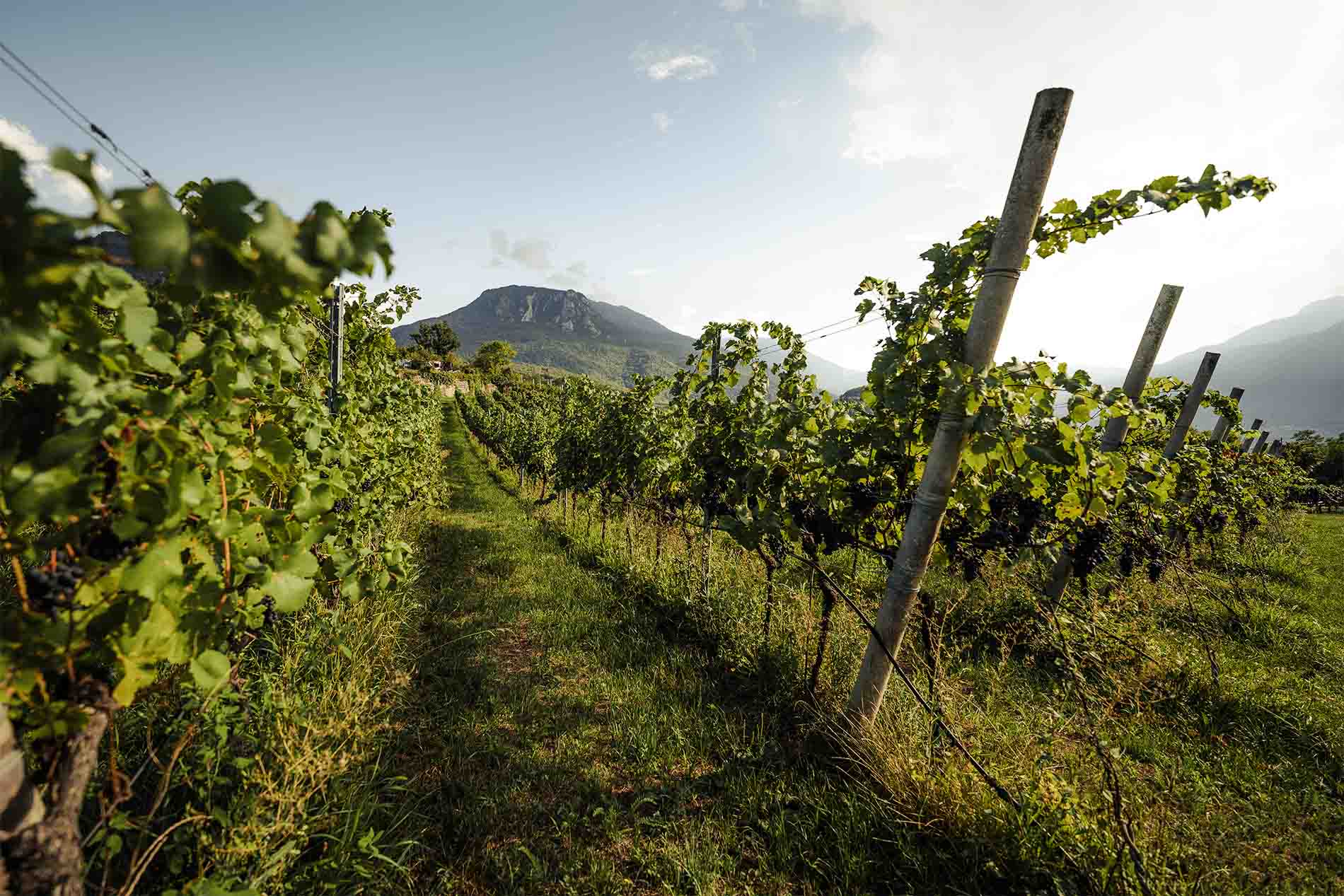
Trentodoc bills itself as “Sparkling Wines from the Mountains,” with vineyard elevations edging up towards 3,000 feet above sea level and producing fresh and complex Chardonnay, the leading component.
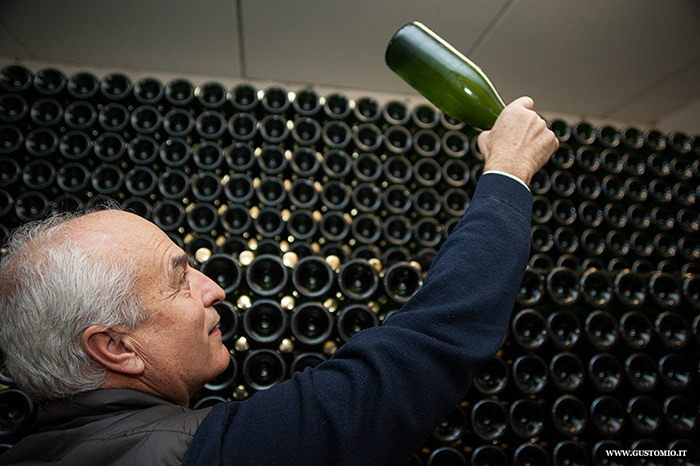
“The wines from here generally have more aromas of Chardonnay, and less of yeast and wood than in Champagne,” says one of the area’s modern-day pioneers, Paolo Malfer of Reví, one of my go-to producers now run by his two sons.
In recent years the number of Trento vintners has exploded to 70. I’ve tasted maybe a dozen. But I hope that by the end of the games that number will have doubled.
For me Reví, based in the small town of Aldeno in the Lagarina Valley south of the city Trento, has been a great starting point: it’s a small, serious producer making nine wines in different shades, mixes of Chardonnay and Pinot Nero and levels of bottle aging up to 100 months. All its wines are vintage-dated, and the winery doesn’t even own a wood barrel.
What’s more, it’s available not just in Italy but in an American bi-coastal selection of Italian restaurants from New York’s Gattopardo and I Sodi to California Wine Spectator Restaurant Award winners Osteria Mozza (Los Angeles) and La Connessa (San Francisco).
The story of Malfer is also a boy-meets-bubbles romance that’s defined his life. Now 76, he made his first sparkling wine before his 14th birthday in 1963—a time when locals grew grapes for Ferrari or made local fruity red Marzemino for family consumption or to sell in bulk.
Malfer was attending the local agricultural middle school and found a book on Champagne making in the library. He took notes and asked his father for some of the family’s Pinot Bianco (primarily used by his mother for cooking) to experiment with secondary fermentation. His first vintage produced 10 bottles for Christmas.
“It seems it was my destiny to make this kind of wine,” he says.
After studying winemaking and viticulture, Malfer went to work for the regional agricultural institutions and later for an enological laboratory.
As a hobby, he planted Chardonnay and in 1982 founded Revì, producing about 100 cases of spumante for local restaurants.
For Reví’s first vintage, he added no final sweet liqueur or dosage found in brut wines. Instead, he left the wine dry as “brut nature”—decades before this became a trendy category.
“The idea of making dosage zero was to express the terroir without adding other flavors,” he says. “I wanted to make a wine with fermented grapes and refermented grapes—basta.”
Trentodoc established as a sparkling wine appelation in 1993 and five years later, Malfer took retirement to focus on his wines.
The winery has really boomed in the last decade with his sons, whom
Malfer says he never pushed to join him: “I always suggested they do something else. This was my passion.”
Both sons studied economics but developed their own passions for wine: Stefano, 42, runs the winemaking and Giacomo 36 runs sales—leaving their dad to focus on the vineyards.
Reví which now produces about 16,000 cases annually, cultivates 25 acres of vineyards and buys about 40% of its grapes from local contract growers.
“Because our wines are all vintage, we need grapes of different provenance to have a certain standard of quality year after year,” says the elder Malfer.
Reví’s wines are topped by a trio of tiny-production bottlings: Re di Reví, aged 100 months on lees, Paladino from high-altitude organic Chardonnay aged 56 months on lees, and Cavaliere Nero from single-vineyard Pinot Noir aged 68 months on lees.
But in my mind Trento wines aren’t a rarified elite pursuit. They are an off-ramp from the usual Prosecco or Champagne dynamic—one that leads through northern Italian mountains that we’ll all be seeing more of in the coming weeks.
Travel Tip: Taste the wines of the Lagarina Valley including Reví and 35 other producers—along with Trentino cuisine—at the homey Casa del Vino della Vallagarina in Isera. You can also rent rooms with a view for a night’s stay. www.casadelvino.info/eng/ristorante