Burgundy’s Other White
Once neglected, Aligote returns in vogue
As I drove through Burgundy vineyards on a northern France trek last month, I soaked up the Bourguignon vibe—that sense of eternal tradition with its sleepy wine villages, finely mapped terroirs and general lack of flash.
But change does happen here.
Take Aligote, Burgundy’s “other white.” After a period of long neglect, in which it was relegated to a low-budget ingredient of Kir cocktails, the grape variety is experiencing something of a renaissance. It’s everywhere in local wine bars and restaurants, and more vignerons in the elite Côte d’Or —from Volnay to Meursault to Marsannay —enthusiastically produce it.
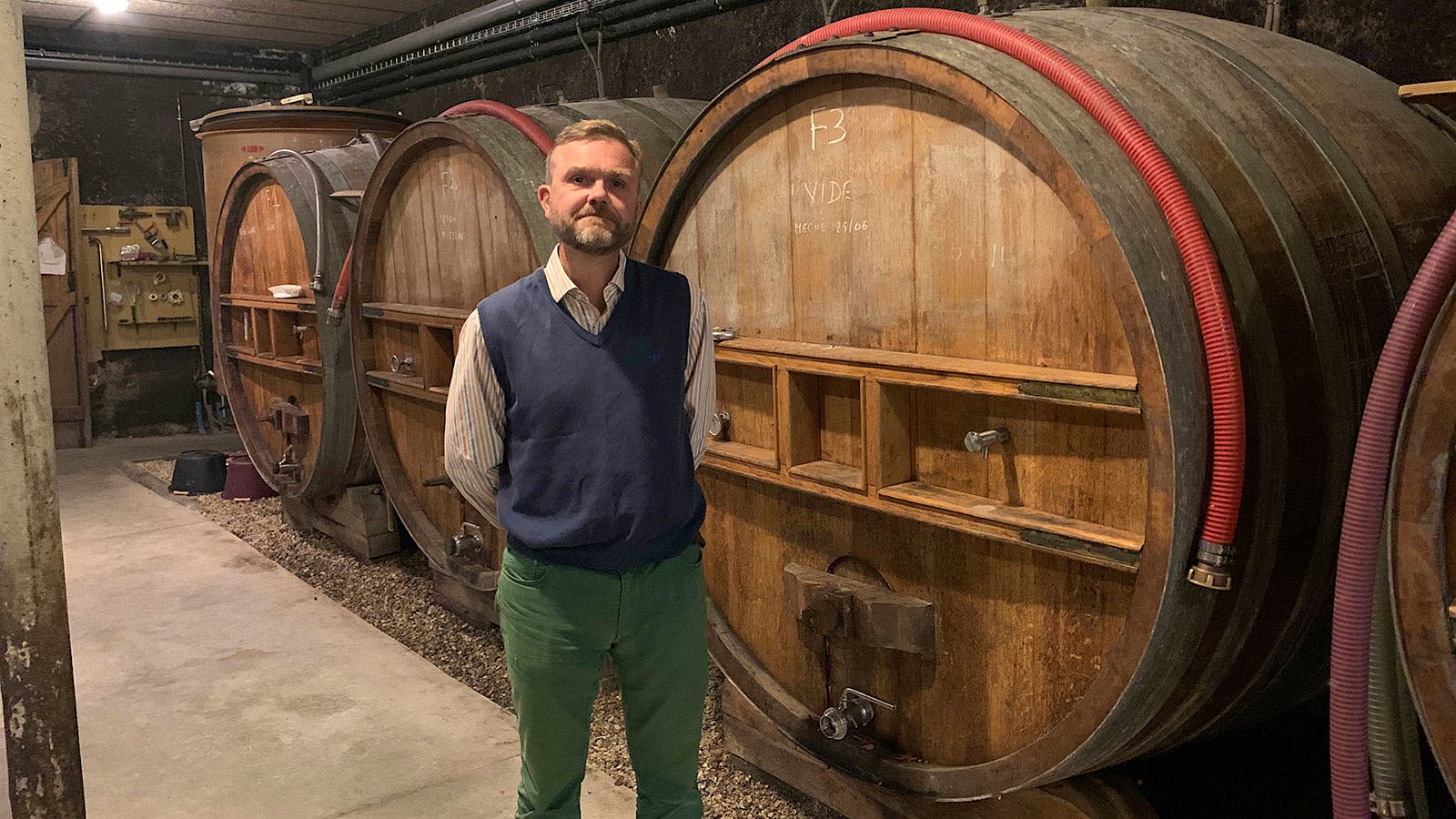
“Aligote is becoming fashionable,” quips Pierre de Benoist, the bearded and bespectacled manager of Domaine de Villaine and the president of the tiny Bouzeron appellation, which prides itself on being prime terroir for Aligote.
Bouzeron lies in Burgundy’s Côte Chalonnaise, south of the more famous Côte d’Or. Today Aligote—a centuries-old hybrid of Pinot Noir and Gouais Blanc — is planted sparsely everywhere from the U.S. West Coast to Eastern Europe. But no one takes it as seriously as the local Bouzeronnais.
“The Aligote of Bouzeron was always viewed as something apart, something different,” de Benoist adds. “Bouzeron is the only appellation in the world dedicated to Aligote.”
Aligote doesn’t roll off the tongue like Chardonnay. Yet more producers are making serious, fresh, zesty and saline Aligote, some of it ageworthy. Leading them is Domaine de Villaine, purchased by de Benoist’s aunt and uncle in the 1970s.
De Benoist’s uncle is none other than Aubert de Villaine, famous as the longtime co-owner and co-director of Domaine de la Romanee-Conti. He and his wife, Pamela, lived in Bouzeron for more than 40 years.
Aligote’s comeback owes some thanks to both de Villaine, 82, and de Benoist, 47, who took over in 2000 and has hit his stride.
Today Domaine de Villaine produces 15 wines; most of its bottlings are Pinot Noir and Chardonnay from outside Bouzeron, from crus in Rully, Mercurey, St.-Aubin and Santenay. But the domaine’s sole Bouzeron white is de Benoist’s greatest passion.
The Bouzeron appellation, created in 1997, strides a pair of gentle verdant slopes on a valley surrounding a tiny village (population around 130) of the same name. The domaine has more than 22 biodynamically farmed acres of Aligote in Bouzeron, all of it the low-production clone Aligote Dore (Golden Aligote). Here, de Benoist keeps the late-ripening variety on the highest parts of the slopes in the poorest soils. Chardonnay and Pinot Noir are generally planted below.
“Bouzeron is the only place in Burgundy where you find Aligote in the best places,” he says, walking through a ridgetop vineyard of 65-year-old, bush-trained vines.
As de Benoist recounts the history, prior to the phylloxera blight in the late 19th century, “Aligote was treated at the same level of quality as Chardonnay and Pinot Noir.”
“After phylloxera, Burgundians decided to relegate Aligote to the back of the slopes, where the soils were deeper and they produced a lot of quantity,” he continues. Bouzeron, it seems, did not go the way of its neighbors.
The chief reason for the grape’s eclipse, explains de Benoist, was its rusticity; it produces a lot of large-leaf foliage and tends to high yields. “It's like a wild animal,” he says. “It can make too many leaves, too many bunches. It needs more attention. Chardonnay is notably more reasonable.”
De Benoist grew up in the Loire Valley, the son of Sancerre wine producers. Before taking the helm of Domaine de Villaine, he was finishing his law studies in Paris with the idea of a career as a police commissioner.
“I figured that was a job in which I would see the most beautiful and ugly in life,” he reflects.
But in 1999, de Villaine persuaded him to come take over—with the help of a cask of the domaine’s Aligote. The wines, then and now, are fermented with native yeasts in large oak casks, where they age for at least a year until blending.
“When I tasted the Aligote,” prior to malolactic fermentation, de Benoist specifies, “it reminded me of the Sauvignon of my youth.”
De Benoist surmises that part of Aligote’s recent success is due to longer, hotter growing seasons and the grape’s ability to maintain its fresh acidity when ripe.
“Aligote has a thick skin, and it needs sun and heat and patience to ripen,” he says. “Now we have more [second] summers and Aligote has more time.”
Aligote isn’t about to dethrone its Burgundy relatives. But bit by bit, it is demanding a seat at the same table.